Excerpts from a students geologic field notebook in western Newfoundland
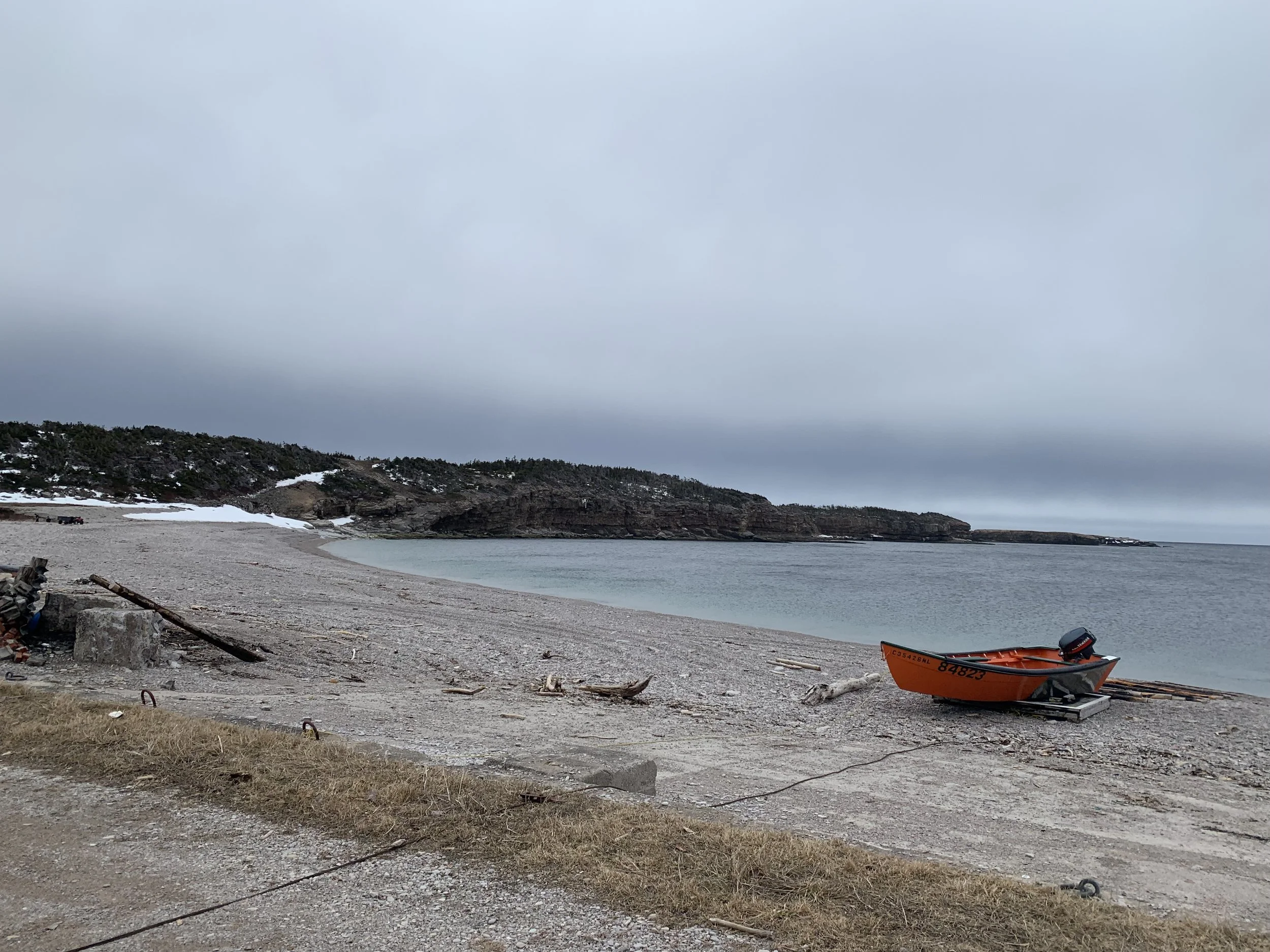
Ship Cove, Port au Port Peninsula, Newfoundland
(Photo credit: Wyatt Hudson)
Date: April 25, 2026
Ship Cove is a small community on the Port au Port peninsula in western Newfoundland. As part of our geologic field course we were instructed to investigate the local geology and return with our interpretation of events. We knew that we were working with Cambrian-Ordovician aged rocks (540-443 million years ago), and that they were part of the Ship Cove formation.
Upon examining the beach it was mostly comprised of cobbles with the occasional large stone layer that extended into the cobble, there was an outcrop that was roughly 2.5 meters high that extended the majority of the beach. Brushing away the miscellaneous cobbles exposed layers of eroded shales/ mudstones. The larger layers had a pustular/ domal texture and only fizzed under hydrochloric acid after using a scribe to break the weathered surface leading us to believe these were dolomized stromatolite layers.
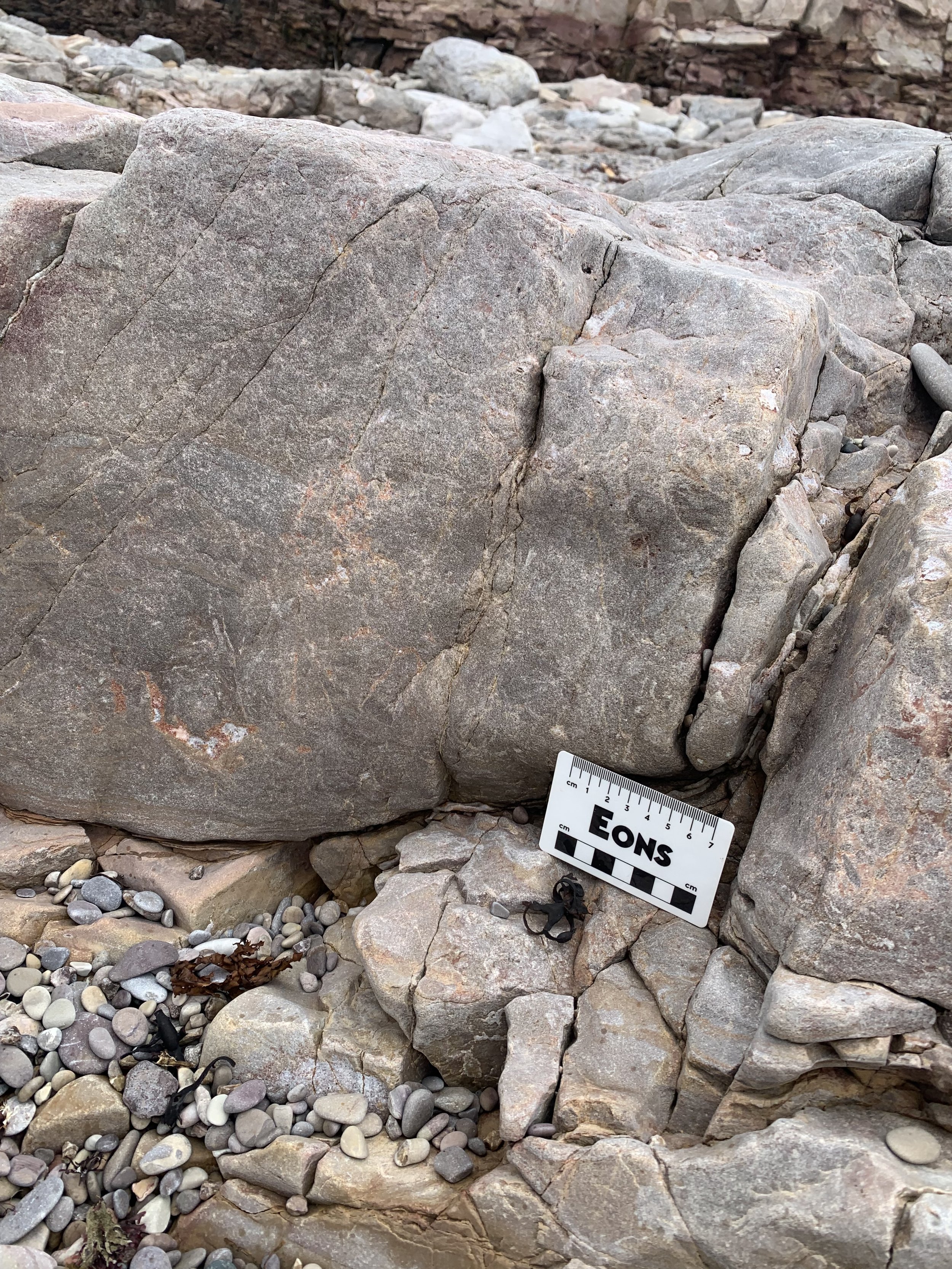
Dolomized stromatolites at Ship Cove
(Photo credit: Wyatt Hudson)
Date: April 25, 2026
Stromatolites are some of the first forms of life in the fossil record and are layers of microbial mats usually made by photosynthetic microorganisms like cyanobacteria and can date back billions of years ago.The ones at Ship Cove however, are somewhere between 540-443 million years old.
Along the outcrop we noticed calcite percipitation and several vugs from dissolution through the stromatolites, and there were also liesegang rings at the base of the outcrop.
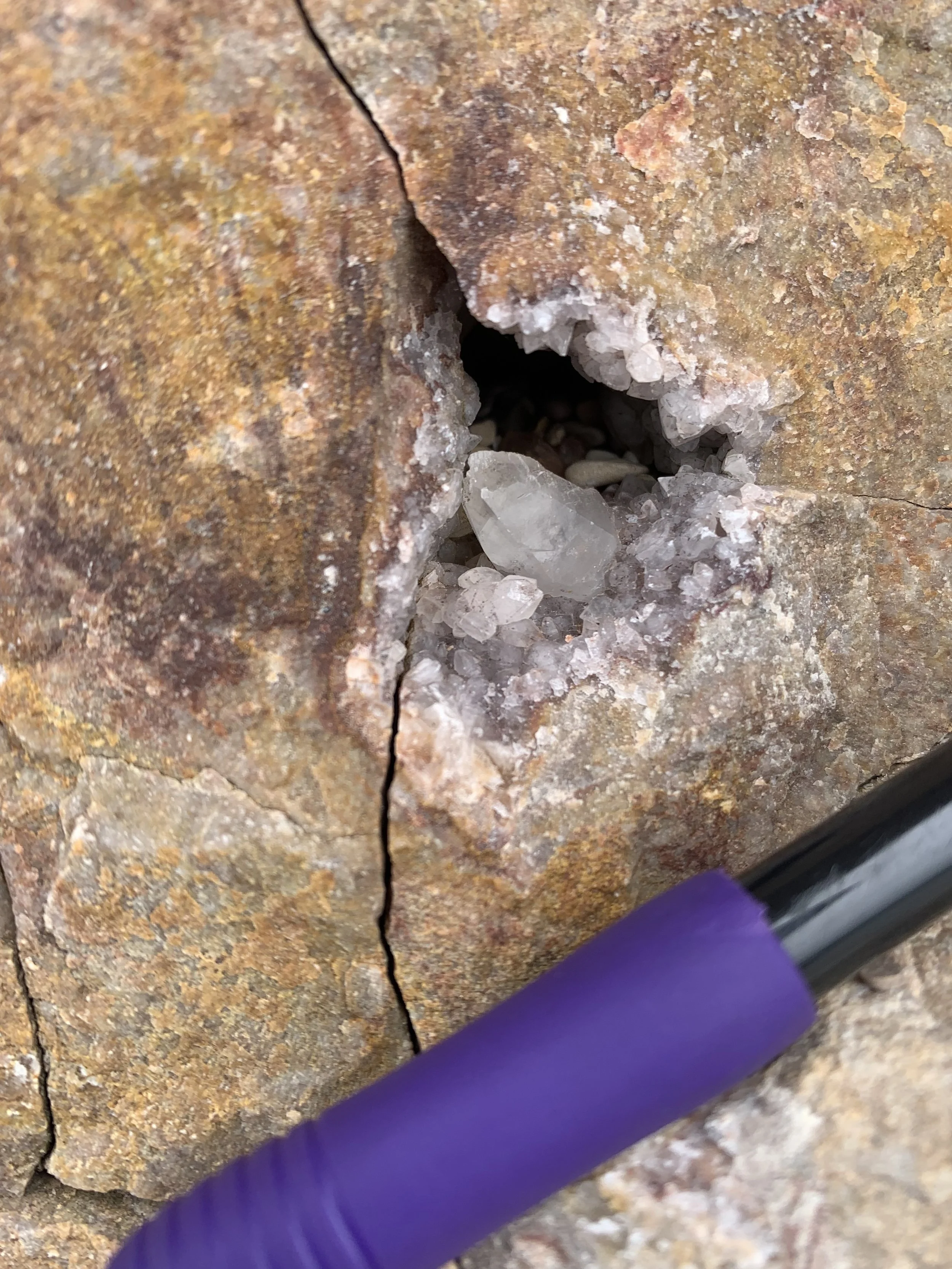
Vug on outcrop at Ship Cove
(pencil for scale)
(Photo credit: Wyatt Hudson)
Date: April 25, 2026
The interpretation from Ship Cove was that the shale and mudstones would have deposited in a deep marine environment, these layers were also more susceptible to weathering whereas the dolomized stromatolitic layers were deposited in a shallow layer because they are photosynthetic but they are also harder than the shale therefore more resistant to weathering. The following diagram illustrates our interpretation:
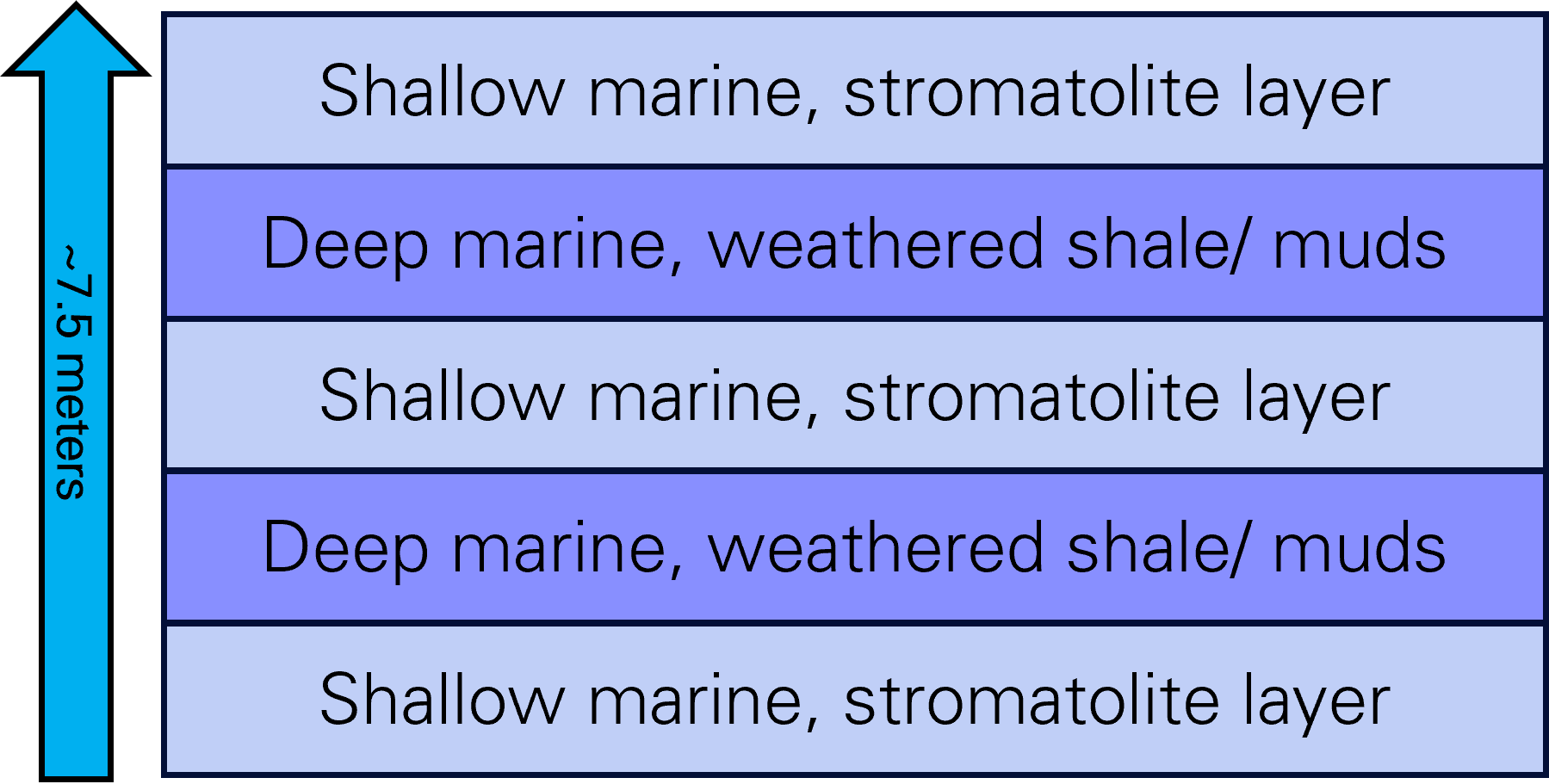
Diagram representative to the geology of Ship Cove
(Photo credit: Wyatt Hudson)
Felix Cove
Felix Cove is a short drive away from Ship Cove on the Port au Port peninsula, however its geology tells a different story. Felix Cove is situated in the Felix formation which is part of the broader Man’O War group and is late Cambrian to Ordovician in age. Our observations from this site were that its stratigraphy was tilted and contained a lot of evidence for a biodiverse shallow marine to deep marine enviornments leading up to the SPICE layer.
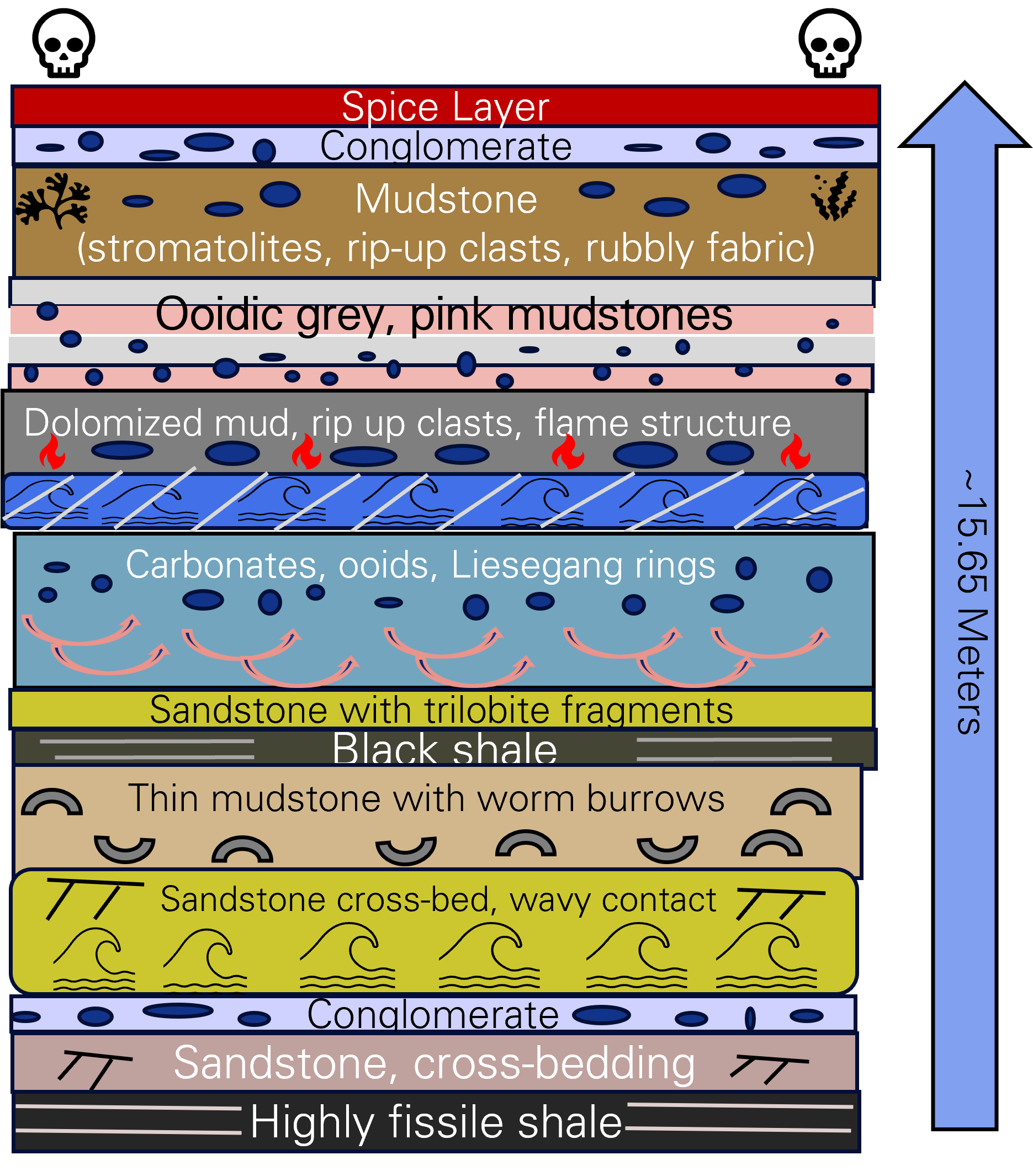
Diagram illustrating observed geologic layers at Felix Cove
(Photo credit: Wyatt Hudson)
Some supporting evidence for our shallow marine/ alluvial environment conclusion is the amount of stromatolites, thrombolites, fossil worm burrows, ooids and ripple marks we observed. There were also the occasional vugs in the outcrop similar to Ship Cove, although this outcrop was much longer.
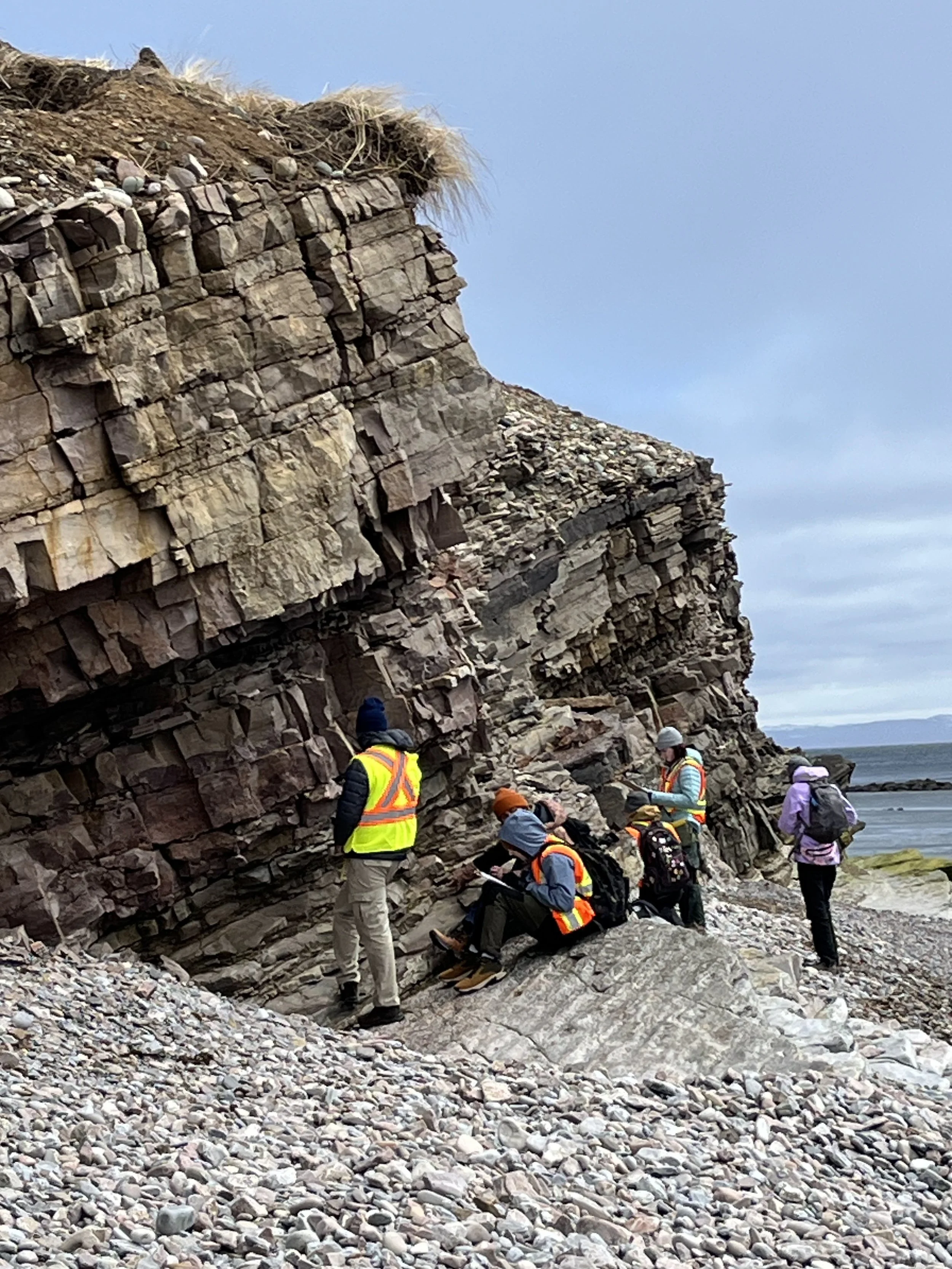
Saint Mary’s University geology students at Felix Cove
(Photo credit: Dr. Simone Booker)
Date: April 25, 2026
The previously mentioned SPICE layer was an event that caused a shift in the ocean’s chemistry, leading to many organisms to die off. This is recorded in rock layers across the globe, in our case, we see all of our happy little guys like trilobites and worms leading up to the SPICE, and then after the SPICE the sedimentary rocks we observed were devoid of life. It is debated whether or not it is a mass extinction event of not.
One of the most memorable parts of this site was when our group had discovered a huge calcite crystal that appears to have been a scalenohedral shape. It was sitting on a ledge of the outcrop and so we retrieved it and passed it around to members in our group. It seemed to have some sort of reddish inclusion, possibly from hematite or another type of mineral. As much as we wanted to bring it back as a teaching specimen for the geology department, we remained good stewards of the land and left it at the site for future students to discover and have the same special moment that we did.
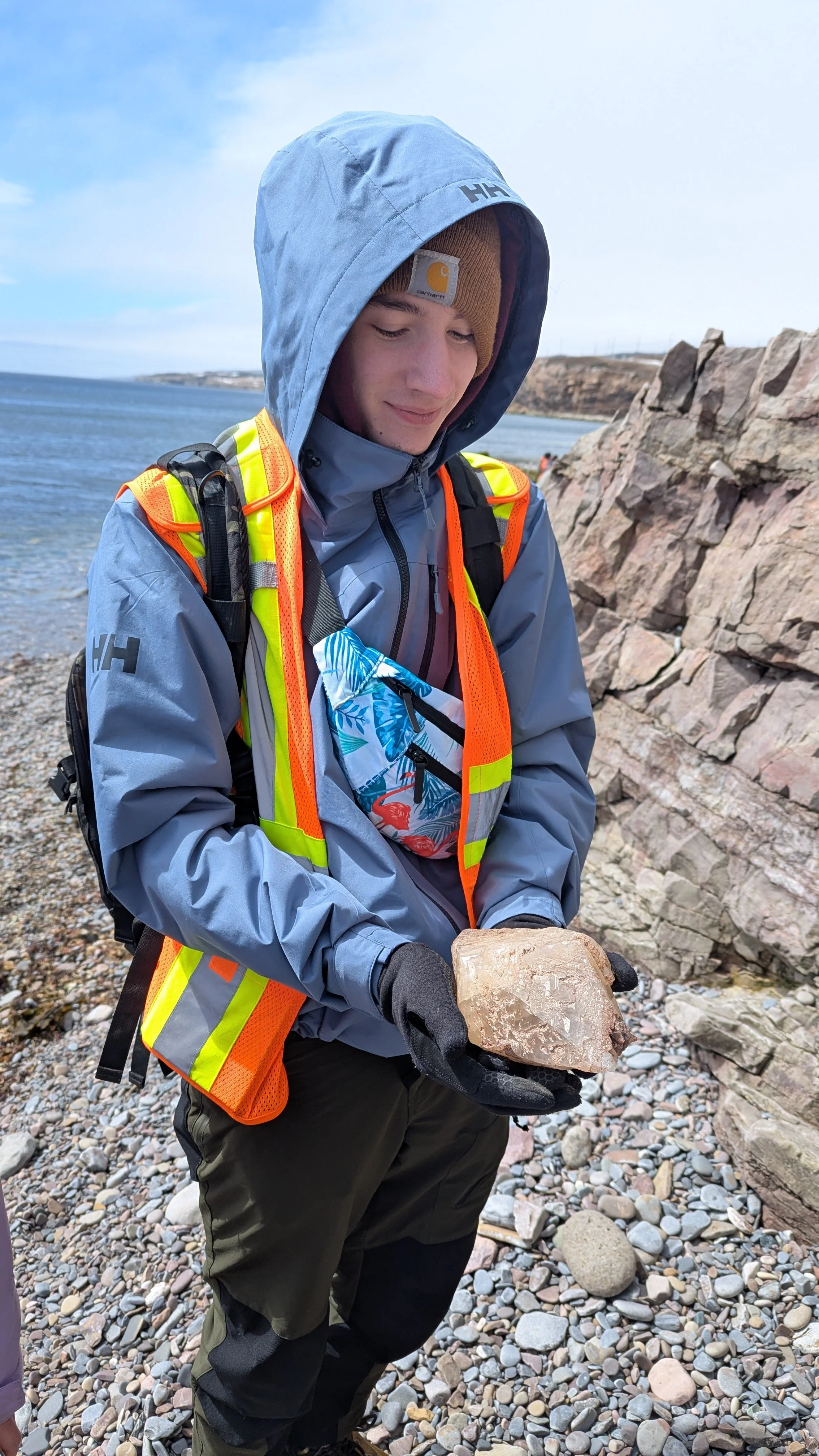
Wyatt Hudson with calcite crystal at Felix Cove
(Photo credit: Geena Morse)
Date: April 25, 2026
Excerpts from field notes may help to illustrate the kind of work an Earth Science student does, to determine not just what kind of rocks are around, but how they can provide clues from the past that when assembled together tell a coherent story of the events that occurred. Once you have these pieces it becomes easy to visualize and contextualize the environment and events like a piece of art that you yourself are standing within.
Further reading and references:
SPICE layer Wikipedia article: https://en.wikipedia.org/wiki/Steptoean_positive_carbon_isotope_excursion
“Definition of Liesegang banding”: https://www.mindat.org/glossary/liesegang_banding
“Geological map of Newfoundland”: https://www.gov.nl.ca/em/files/mines-investments-geology-map-nl.pdf